CONVERSION COURSE · LISBON & SETÚBAL
Parakite course for paraglider pilots
It all starts on the ground.
In Pilot2Wing, we start with the pilot.
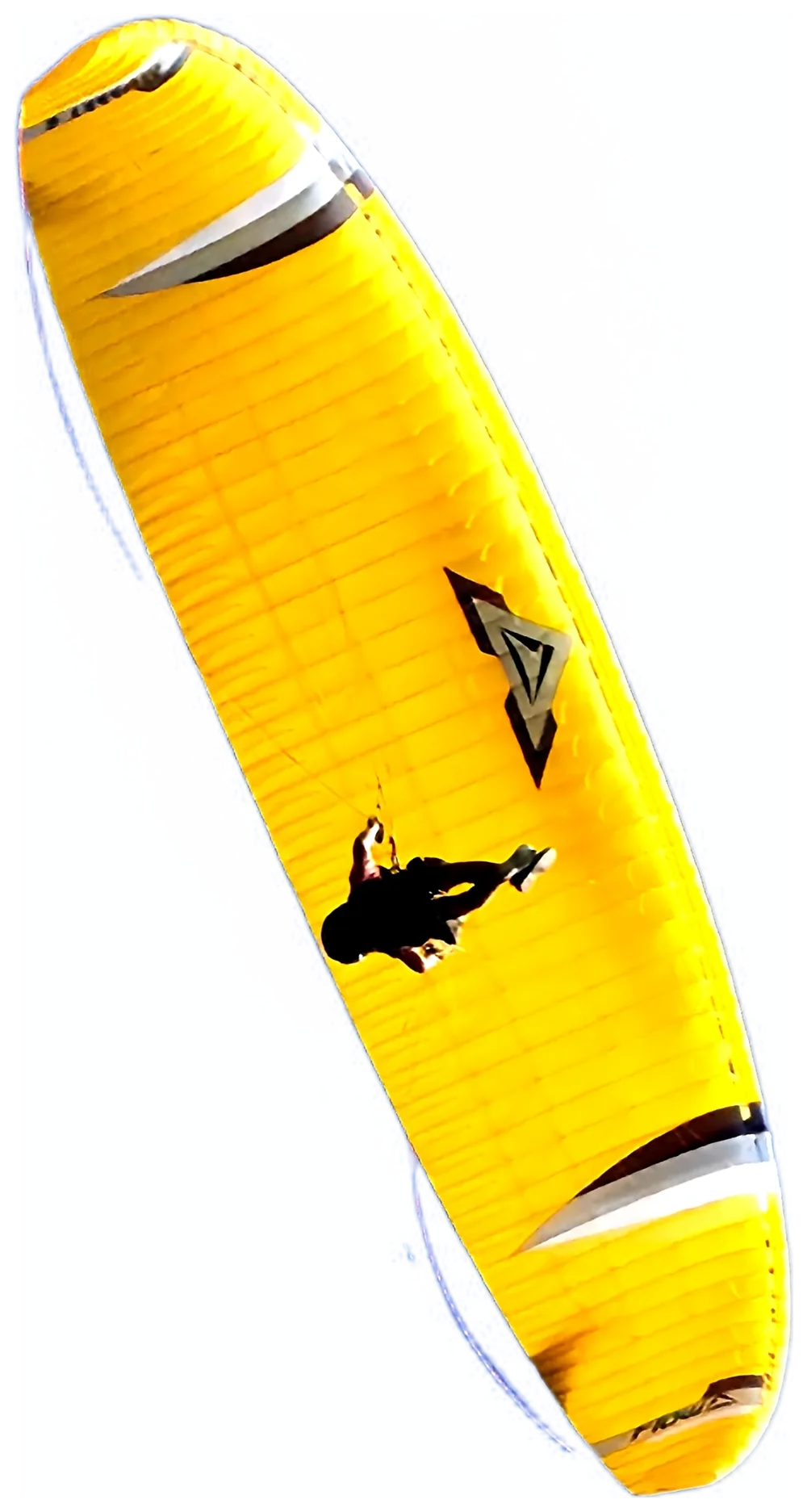
A conversion course for paraglider pilots who want to fly the Parakite, in the Lisbon and Setúbal area: training takes place at sites less than 35 minutes from Lisbon, in the municipalities of Almada and Sesimbra. It follows the Pilot2Wing method - understanding the wing, preparing the body, managing energy - with 4 reference days and a maximum of 3 pilots, and it costs €800 with Parakite and harness included. Hourly training is also available, at €60.
The course at a glance
How long it lasts, what it costs and what is included
Full course
€800
- 4 reference days
- About 4 hours a day of direct coach support (not fixed)
- Days scheduled around your availability and the conditions
- Maximum 3 pilots per course
- Parakite and harness included
Hourly training
€60/hour
- At your own pace
- Equipment included
- You pay for the hours you need
Break-even: about 13 hours. With about 16 hours of direct support in the course, beyond that the full course works out cheaper than paying by the hour.
Correction is individual, even when the training is in a group.
The 4 days are a reference, not a promise. Some pilots need only a few hours and some need more training than this - both are normal. The hourly option exists for both cases.
Full course or by the hour?
Six questions, one tap each. At the end we tell you which option makes more sense and get the WhatsApp message ready.
Who it is for
Why a paraglider pilot needs a conversion course
Requirements
Paraglider pilots.
We do not ask for a minimum number of hours - what counts is what the initial assessment shows: experience, habits and responses already consolidated.
What the conversion starts by assessing
Before any exercise, the coach needs to know which pilot they are working with. It is not a test: it is what decides where to start and how fast to move.
- Experience
- Habits
- Automatic responses brought from paragliding
- Responses already consolidated
Paraglider
What you already bring
- flying experience
- reading conditions
- take-off and landing
- awareness of space and risk
Parakite
What you need to adapt
Energy
- energy management
- speed
- pitch
- timing
Body and harness
- body
- harness
- legs
- controls
Habits
- automatic responses learned on a paraglider
Paragliding experience is an advantage. It does not replace adapting to the Parakite.
Three paragliding habits that change on the Parakite
These are early tendencies, not universal rules: adapting depends on the pilot, the wing and the conditions.
- 1
Controlling mainly with the brakes
On a paraglider
The pilot tends to look for the response through the brakes.
On the Parakite
The pilot starts by working more with the body, legs, chest, shoulders and risers, using the brakes more progressively and consciously.
- 2
Looking at the wing or at the high side
On a paraglider
It is common to follow the wing with your eyes.
On the Parakite
The pilot learns to keep their eyes on the low side and to feel the wing through the body and the risers, without over-reacting to what they see.
- 3
Correcting late, when the wing is already off line
On a paraglider
Some corrections can be made once the wing is already overhead.
On the Parakite
The speed of the inflation and the closeness to the ground demand anticipation: prepare your position, keep the risers in front and correct early with the body and the opposite side.
Where you start, depending on what you already fly
Newer paraglider pilot
Starts by consolidating body position, riser control, inflation and basic corrections. The aim is to build good reflexes before increasing the speed or complexity of the exercises.
Experienced paraglider pilot
Usually needs to relearn some automatic responses: trust the body more, not brake by reflex, and accept that the wing responds faster. The start may be spent replacing paragliding habits with responses suited to the Parakite.
Pilot with groundhandling or mini-wing experience
Already brings some feel for the wind and the wing’s movement. Can move on faster, but it is necessary to assess whether their reflexes and technique match the specific behaviour of the Parakite they will use.
There is no fixed calendar. Progress depends on previous experience, the ability to read the wing, the consistency of control and the training conditions. You only move on when the responses are natural, controlled and repeatable.
Tell us what you fly today The technical difference between the wings
Who teaches, and where
Who delivers the training, where it happens and with what equipment
Knowing how to do it is one skill. Knowing how to teach it is another
Knowing how to fly and knowing how to teach are different skills. Teaching requires observing, diagnosing, correcting and adapting the progression to the pilot - and knowing when not to intervene.
Coaches Pilot2Wing
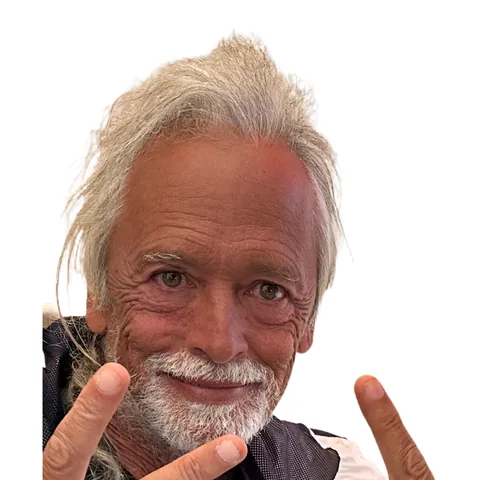 Paulo
Paulo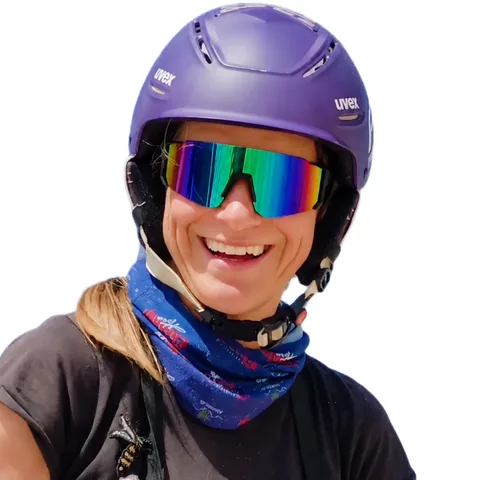 Bea
Bea
The training takes place at sites less than 35 minutes from Lisbon, on the Setúbal Peninsula - Alfarim, Lagoa de Albufeira and Praia do Meco in the municipality of Sesimbra, Fonte da Telha in Almada. There is no fixed location: each session’s site is chosen by the day’s wind and the pilot’s level - not by the calendar.
- Alfarim groundhandling
- Fonte da Telha first flights
- Lagoa de Albufeira flying, as conditions allow
- Praia do Meco flying, as conditions allow
The Parakite and harness needed for the training are included, and the course is run on the Mullet 2. You bring what you would bring for a day of flying: helmet, footwear that copes with sand, and clothing for whatever wind there is.
What this course is
Autonomy is not experience
Autonomy is being able to train on your own within your level: you understand what the wing is doing, you repeat on purpose, you recognise and correct your own mistakes, and you know when not to.
Nobody becomes experienced in 4 days. What can be done is give you a correct foundation and enough autonomy to keep training within your own level - which is a different thing, and it is the thing that lasts.
Autonomy criteria
Understand and execute
- Understand the principles
- Control the wing on the ground
- Use body and controls coherently
Correct
- Recognise mistakes
- Be able to correct them
Decide
- Choose suitable conditions
- Know your own limits
- Know when to stop
That is autonomy Keep training without constantly depending on the coach
Autonomy
It is taught.
Measured by criteria, not by days.
Experience
It accumulates.
Comes later, with the hours you put in.
How it is measured
Experience is not measured in manoeuvres
A manoeuvre demonstrates one specific skill; it does not measure overall experience. And experience is not just accumulating hours either.
Experience appears when the pilot no longer needs to think consciously about every small movement, without ceasing to understand what they are doing.
How you recognise it
- A strong connection with the wing
- Reading and anticipation
- Decision-making
- Progressively natural responses
- The ability to adapt when something does not happen as expected
- Knowing how, where, when and whether to do something
The method
Understand, execute, correct, repeat, consolidate
Pilot2Wing organises the training into stages. Within each stage, learning follows the same cycle: understand, execute, correct, repeat, consolidate and respond naturally.
- Understand
- Execute correctly
- Correct
- Repeat correctly
- Consolidate
- Respond naturally
Each step only makes sense after the one before it. Executing before understanding gives you a movement that works once and cannot be repeated on purpose; repeating before correcting is what turns a mistake into a habit.
Quality before speed
- Quality
- Consistency
- Speed of response
Speed is not trained before the quality of the movement. First you understand, execute correctly, correct, repeat correctly and consolidate. Only then is the time between stimulus and response progressively reduced - which is what the Pilot2Wing Quick Response Game trains.
Learn it right today, so you react naturally tomorrow.
Error and automatism
The body learns what it repeats, right or wrong
A repeated mistake becomes a habit
The path we want
- Correct movement
- Correct repetition
- Useful automatism
The path we avoid
- Wrong movement
- Repeating the mistake
- Automatism hard to undo
Once it is installed you are no longer correcting a movement: you are correcting a habit, and that costs far more than learning it right the first time.
A right result can come from a wrong technique
It is not enough for the wing to respond correctly. The movement that produced that response also has to be correct. A wing can do exactly what you wanted through a technically wrong compensation - and a right result obtained that way is the worst teacher there is: it confirms the mistake and invites you to repeat it.
The coach watches the process, not just the wing
That is why both are watched at once: the result and the process. It is that double reading that catches the mistake in the moment, before it gets repeated.
- Mistake
- Understand it
- Correct
- Repeat correctly
Correcting early means correcting less
Read the wing before acting
- Notice the change beginning
- Interpret
- Respond early
- Smaller input
This is not training reaction without reading. The point is not to be fast: it is to notice a change beginning, interpret it, and respond while the response can still be small.
Early reaction
- You see it start
- Small input
- Little energy to correct
Late reaction
- You see the end
- Big input
- More energy to manage
Body First
Body First: preparing the body before adding energy
First we learn to position and use the body. Then we progressively add the wing’s energy.
The body learns first
Eyes, posture, torso, hips and legs are worked before the wing starts generating energy. It is this order that gives the pilot time to understand the movement instead of reacting to it.
What Body First is not
Body First does not mean replacing the controls with the body. It means preparing the pilot to use eyes, posture, hips, legs and controls in a coordinated way, before progressively adding the wing’s energy.
The controls remain part of flying the wing; at this stage, the focus is first on preparing the body.
Nor is it a set of memorised gestures. The logic is always the same: understand the movement, execute it correctly, and only then apply it with energy.
- Understand the movement
- Execute it correctly
- Apply it with energy
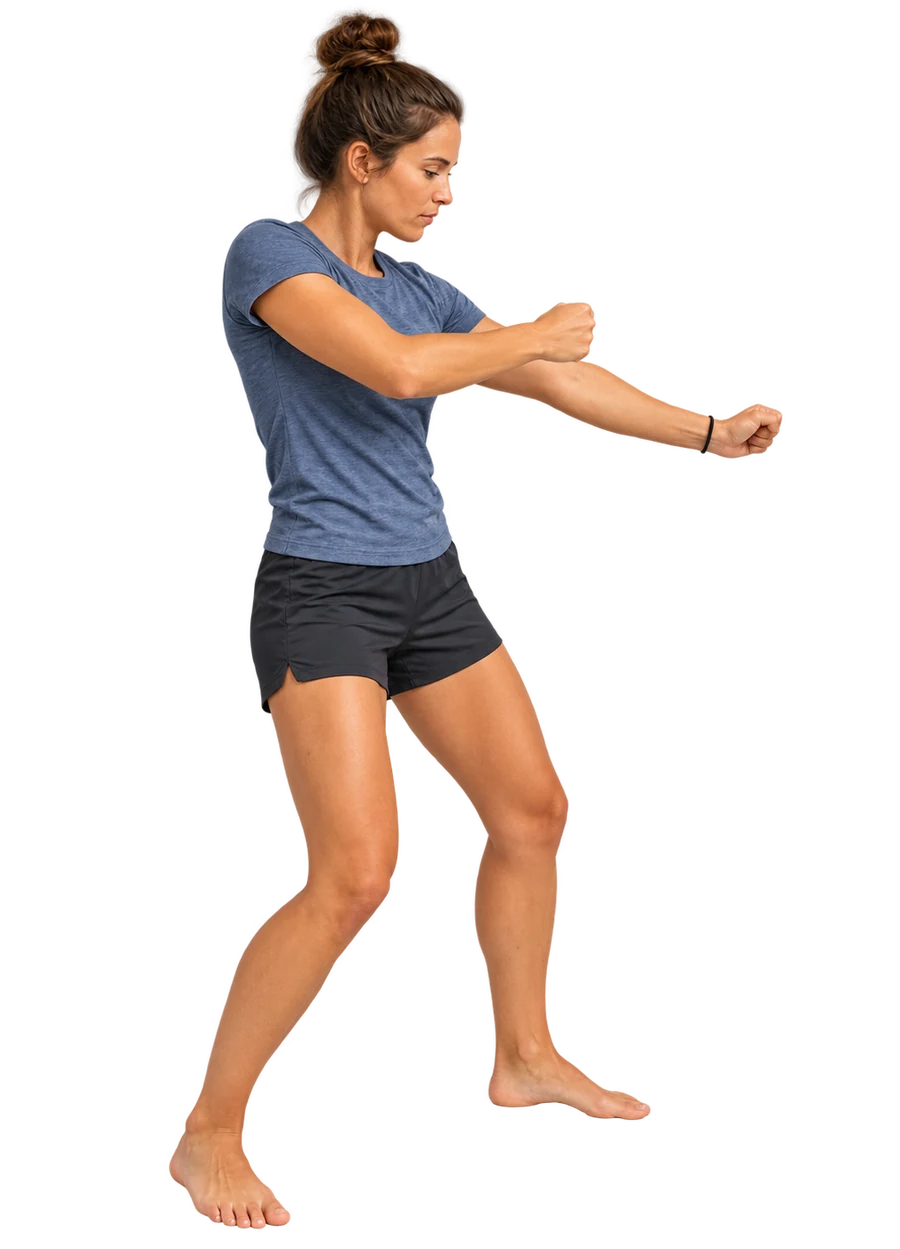
- Eyes helps orient posture, direction and anticipation
- Shoulders and chest take part in the rotation and in orienting where you are going
- Torso sets the body’s axis and inclination
- Hips takes part in the body’s position and orientation
- Legs take part in body position and in coordinating the movement
The harness and the legs
Split-leg harness: the link between body, load and wing
In a split-leg harness, the legs can work more independently. The position of the legs and hips influences how load is distributed in the harness and, through it, the response of the pilot–wing system.
Anyone coming from paragliding brings a different harness reference, and that is what gets adjusted first.
Leg, hips, harness, risers, wing
- Leg
- Hips
- Harness
- Risers
- Wing
It is a conceptual chain of movement, load and response - not a rigid mechanical relationship, and not a fixed rule of the «this leg position produces this wing response» kind. It is there to understand the relationship, not to memorise answers.
The leg does not fly the wing on its own. It is part of a chain of movement that starts at the pilot and ends at the wing.
Body, harness and controls work together
None of these parts works in isolation: body, harness and controls are coordinated while flying.
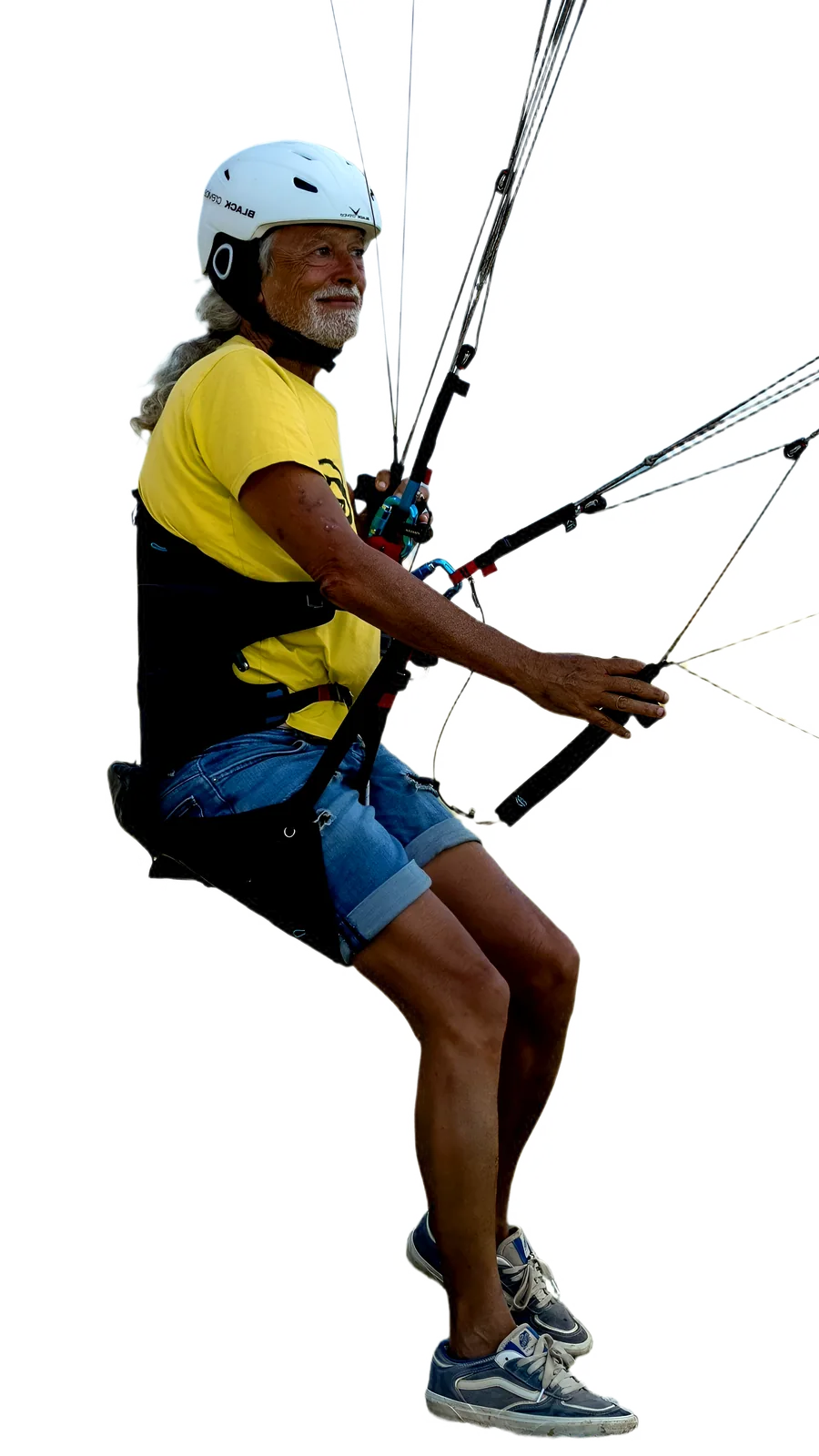
- Suspension points this is where the wing connects to the harness
- Harness connects the pilot to the suspension points and takes part in how load changes reach the system
- Controls act directly on the wing, at the same time as the body
- Hips takes part in how load is distributed in the harness
- Leg straps independent, one per leg
- Legs each leg’s position changes how the load is distributed
What the pilot learns to feel
Groundhandling: where the body meets the energy
It is on the ground that all of this is worked first, with the wing already generating energy and the pilot still in contact with the ground. Groundhandling is not a warm-up: it is a stage of the progression, and it is where the pilot starts working position, movement, load and the wing’s response before the transition to flight.
Why energy management is the centre of the training
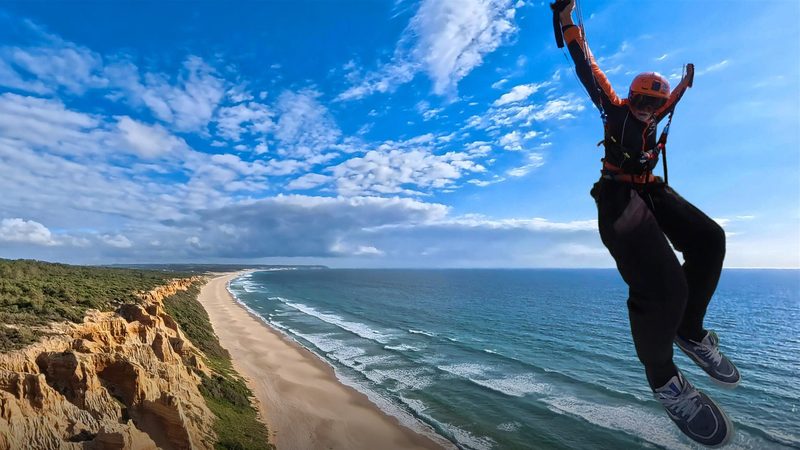
A wing mainly holds energy associated with its height and its speed. By changing the trajectory, the pilot can convert one into the other and manage how much is conserved or transformed during the flight. On the course this matters because almost everything trained - body, legs, controls, early correction - exists so that this management is understood and practised consciously.
How you progress
It is not «Day 1, Day 2, Day 3»
You move to the next step when the previous one is consolidated, not when the calendar says so. Two pilots with the same paragliding experience can take very different amounts of time, and neither of them is behind.
The progression, in practice
The order is the same; the time in each phase is each pilot’s own. Both reach autonomy.
The widths are illustrative: they show that the phases do not last the same for everyone. They are not days or hours.
- 01
Assess
The experience, habits and automatic responses you bring from paragliding.
You move on when it is clear where to start and at what pace.
- 02
Prepare
Work without a wing and body exercises - eyes, posture, torso, hips and legs (Body First).
You move on when the movement is understood and done correctly.
- 03
Introduce energy
Mini-wings, and the wing’s energy added little by little, on a body that is already prepared.
You move on when body and controls respond in a coordinated way.
- 04
Groundhandling
On the ground, with the wing generating energy: reading the wing and correcting early.
You move on when you control the wing on the ground with small inputs.
- 05
Transition to flight
From the ground into the air, with what was consolidated in groundhandling.
You move on when the transition is safe.
- 06
Fly
Managing energy - height and speed - consciously.
You move on when energy management is understood and practised.
- 07
Decide
Wind, site, space, obstacles, margin, current level and the pilot’s condition.
You move on when you choose suitable conditions and know when not to fly.
- 08
Autonomy
Training on your own within your level, without constantly depending on the coach.
It is not the end: it is where experience begins.
The coach intervenes less and less
- Stage 1
Coach decides Pilot executes
The coach chooses the exercise and says what to do.
- Stage 2
Coach asks Pilot thinks and decides
The decision passes to the pilot; the coach guides with questions.
- Stage 3
Pilot runs the whole cycle
The coach observes. The pilot observes, interprets, decides, executes and reviews.
When it does not go as expected
- Observe
- Adapt
- Respond
Autonomy is also noticing when something is not happening the way you expected. This is not a manoeuvres course: it is the ability to deal with variation and with your own mistakes.
Deciding not to fly is part of flying
Nobody films the decision not to launch. But it is the same skill that makes a pilot slow down before needing to, and it is the last thing taught because it depends on everything else.
What goes into the decision
Questions
Frequently asked questions
How much paragliding experience do I need?
There is no number. What counts is what the initial assessment shows: experience, habits and responses already consolidated. That is what decides where to start, and it is why two pilots with the same hours can follow different paths.
Are the 4 days compulsory?
No. They are the reference duration. Some pilots need a few hours and some need more - and the hourly option exists precisely for that.
Will I be autonomous at the end?
The aim is autonomy to keep training within your own level, and that is measured by criteria, not by days. Autonomy is not experience: experience comes later, with the hours you put in.
How long until I fly on my own?
It depends on what is consolidated, not on the number of sessions. The progression goes through assessing, preparing, introducing energy, groundhandling and the transition to flight - and you move on when the previous phase is solid, not when the calendar says so.
What do I bring, and what is included?
The Parakite and harness are included, and the course is run on the Mullet 2. You bring a helmet, footwear that copes with sand, and clothing for whatever wind there is.
How many pilots per course?
A maximum of 3. Correcting body and position means watching one person at a time, and correction is individual even when the training is in a group.
What happens if the conditions do not allow flying?
We work on what can be worked on - body, positions, groundhandling - or we reschedule. Deciding not to fly is part of flying, and it is one of the things the course teaches.
What is the difference between autonomy and experience in Parakite?
Autonomy is being able to train on your own within your level - you understand, you repeat on purpose, you correct and you know when not to. Experience is what comes after: connection with the wing, anticipation, decision-making and increasingly natural responses. Autonomy is taught; experience accumulates.
What is a reflex profile?
Reflex is a characteristic of the profile’s geometry that influences the wing’s pitch moment and longitudinal behaviour, especially in faster configurations. It does not remove the need to fly the wing, nor does it make it immune to collapses. On the course, what matters is understanding how that behaviour influences flying and energy management.
Talk about the course
Tell us what you fly today. We will help you work out where to start
Six questions, one tap each. At the end we tell you which option makes more sense and get the WhatsApp message ready.